OPUS PUBLICA
Knowledge. Published. Impact. Enduring.
Initializing Opus Publica Platform...
Knowledge. Published. Impact. Enduring.
Opus Publica is an open-access scholarly publishing platform dedicated to research that advances understanding of global affairs, public policy, society, law, culture, finance and the institutions that shape our shared future.
Our platform provides a transparent, peer-reviewed infrastructure for scholars and institutions worldwide. Every publication is treated as a permanent addition to the global academic record, complete with persistent Crossref metadata, Gold Open Access distribution under Creative Commons licensing, and long-term digital preservation.
Five complementary formats. One shared purpose — a more just, inclusive and sustainable world.
Peer-reviewed research contributing to academic discourse.
In-depth institutional research on critical global issues.
Data-driven annual assessments and comparative analysis.
Evidence-based analysis to inform policy and practice.
Comprehensive works of lasting scholarly and societal value.
Double-anonymous peer-reviewed journals offering high-rigour scholarly articles.
Peer-reviewed monographs and edited volumes offering long-form scholarly depth.
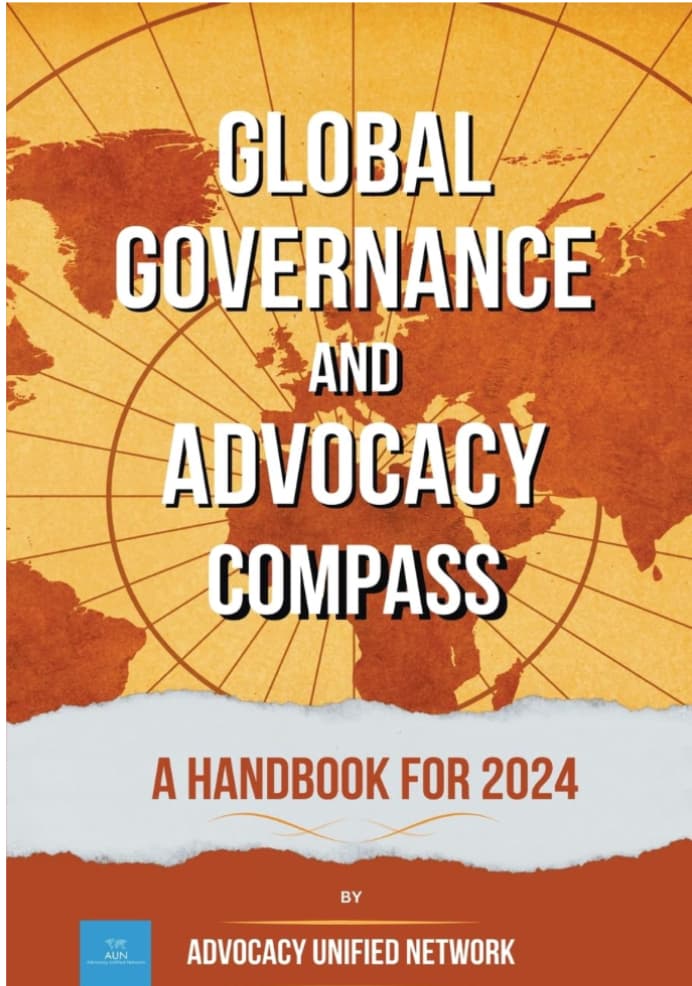
Navigate the complex landscape of global governance with "Global Governance and Advocacy Compass: A Handbook for 2024."
Opus Publica provides a multi-tenant environment facilitating rigorous academic vetting. All published manuscripts undergo double-anonymous peer review and receive persistent Crossref DOIs for indexing integration in world databases, enabling researchers to discover cross-disciplinary insights.
Opus Publica operates from the global offices of the Advocacy Unified Network
Fluwelen Burgwal 58, 2511 CJ Den Haag, Netherlands
85 MOUNT HOPE RD, MAHOPAC NY 10541-0000, USA
Anamnagar, Kathmandu, Nepal
Need to search older indexes? Use the search bar above to scan all historical volumes.
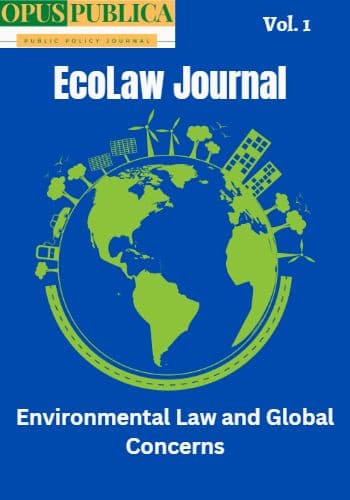
Environmental Law and Global Concerns
Independent institutional research and policy assessments addressing major global, regional and emerging challenges.
The Global Digital Compact was adopted by consensus at the Summit of the Future on 22 September 2024 (UN General Assembly resolution A/RES/79/1). This inaugural assessment by the AUN Global Digital Compact Observatory evaluates the first fourteen months of implementation across its five core objectives: closing digital divides, expanding digital economy inclusion, fostering a safe and secure digital space, advancing responsible data governance, and enhancing international governance of artificial intelligence. All commitments carry an implementation horizon of 2030. Based on the GDC Governance Index 2025, the report provides a baseline evaluation for the 2027 High-Level Review.
The Global Digital Compact was adopted by consensus at the Summit of the Future on 22 September 2024 (UN General Assembly resolution A/RES/79/1). This inaugural assessment by the AUN Global Digital Compact Observatory evaluates the first fourteen months of implementation across its five core objectives: closing digital divides, expanding digital economy inclusion, fostering a safe and secure digital space, advancing responsible data governance, and enhancing international governance of artificial intelligence. All commitments carry an implementation horizon of 2030. Based on the GDC Governance Index 2025, the report provides a baseline evaluation for the 2027 High-Level Review.
The Fourth International Conference on Financing for Development (FFD4), held in Sevilla, Spain, from 30 June to 3 July 2025, established the normative baseline for international development financing. This independent assessment prepared by the Advocacy Unified Network (AUN) monitors and measures the implementation of the commitments contained within the Sevilla Commitment framework across global, regional, country, and income-group levels.
The State of Global Governance 2023 report presents a comprehensive evaluation of global governance architecture across eleven major policy domains.
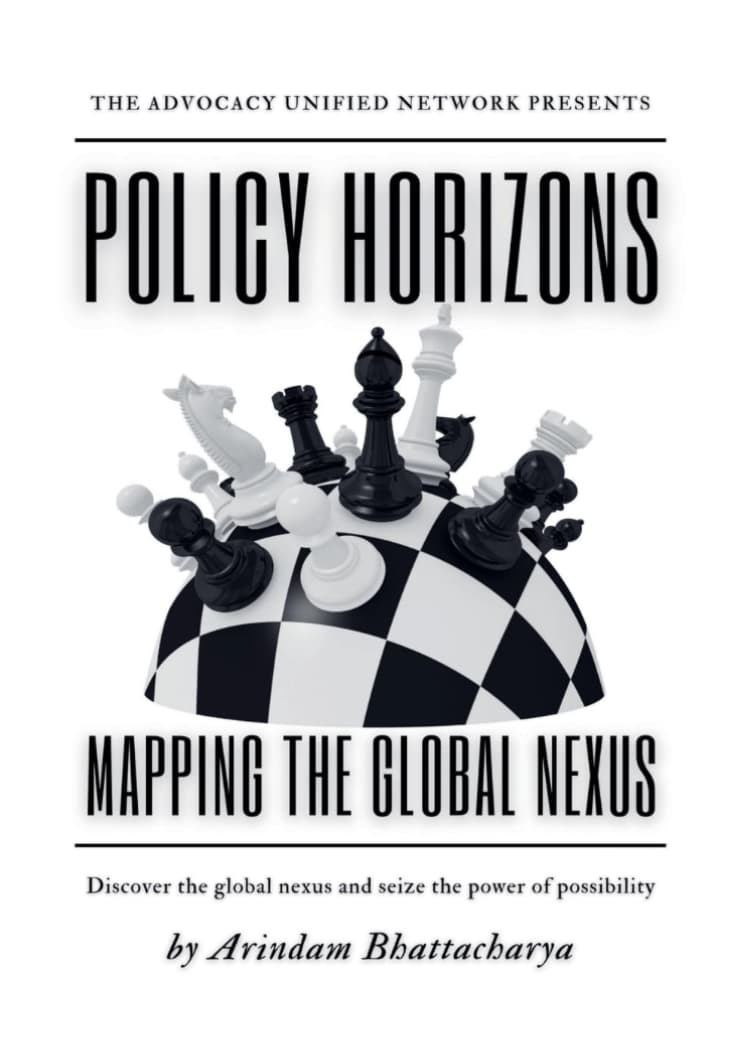
Policy Horizons: Mapping the Global Nexus (Vol-I)" by Arindam Bhattacharya is an authoritative and comprehensive exploration of the intricate dynamics shaping public policy in an increasingly interconnected world.

What keeps a civilisation alive when kingdoms fall, borders change, and empires disappear? The answer may lie in an unassuming town in eastern India that the world has largely overlooked.

Decoding Justice: Socio-Economic Dimensions" by Arindam Bhattacharya is a groundbreaking exploration into the intricate interplay between legal decisions and their profound socio-economic ramifications.
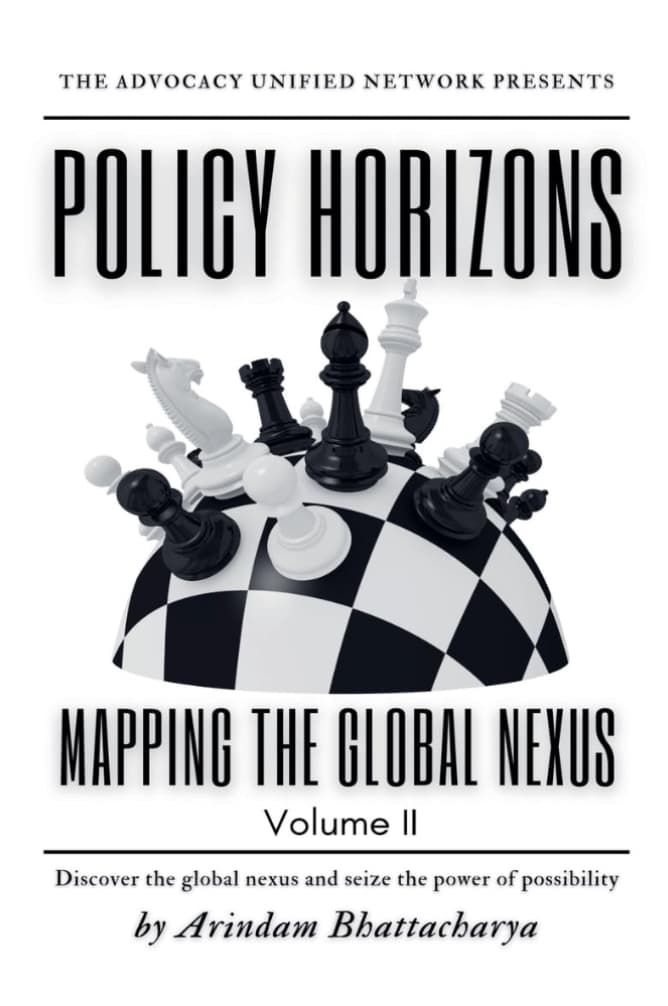
Policy Horizons: Mapping the Global Nexus, Vol-II extends the exploration of global policy challenges begun in Volume I, focusing on how interconnected forces are reshaping our world. While Volume I established the groundwork by examining economic policies, human rights, and environmental sustainability, Volume II delves into health, education, culture, migration, energy, urbanization, digital governance, and international cooperation.

GRACE: Timekeepers of Ancient Cultural Legacy offers a profound exploration of the urgent need to preserve ancient cultures and traditions in the face of mounting global challenges.

A remarkable fusion of cultural immersion, encounters, and recollections conveyed with lyrical gentleness.

A timeless scripture meets modern governance in this thought-provoking book that reimagines the Bhagavad Gita's wisdom.
The Fourth International Conference on Financing for Development (FFD4), held in Sevilla, Spain, from 30 June to 3 July 2025, established the normative baseline for international development financing. This independent assessment prepared by the Advocacy Unified Network (AUN) monitors and measures the implementation of the commitments contained within the Sevilla Commitment framework across global, regional, country, and income-group levels.
The State of Global Governance 2023 report presents a comprehensive evaluation of global governance architecture across eleven major policy domains.