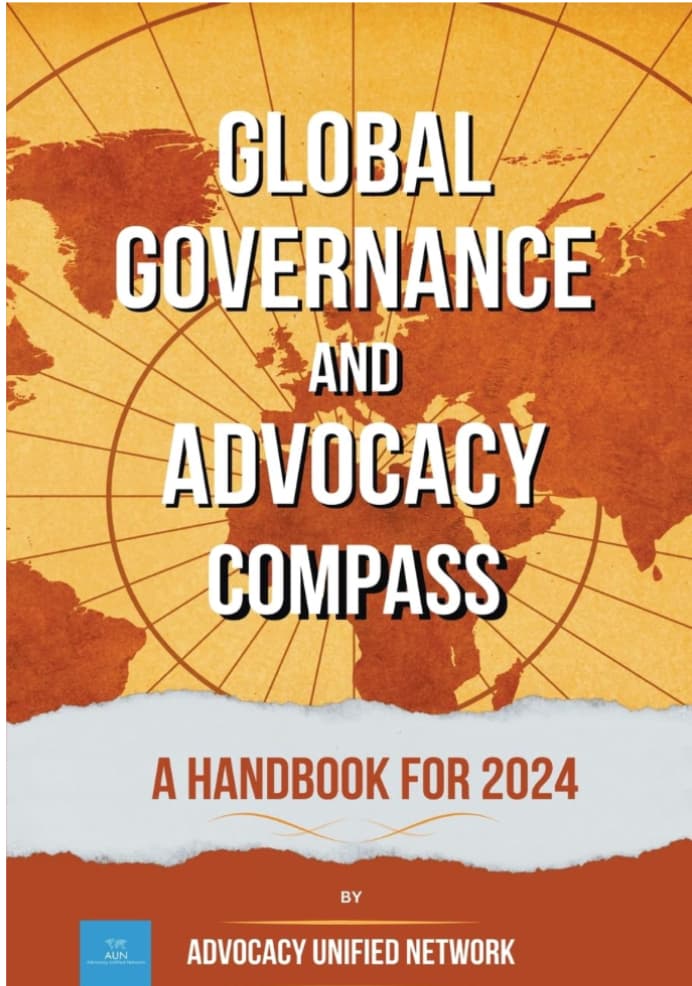
Global Governance and Advocacy Compass: a Handbook for 2024
Synopsis
Navigate the complex landscape of global governance with "Global Governance and Advocacy Compass: A Handbook for 2024."
Navigate the complex landscape of global governance with "Global Governance and Advocacy Compass: A Handbook for 2024." Published by Advocacy Unified Network, this comprehensive guide sheds light on the significant events, policy shifts, and advocacy strategies that defined the year 2024. Dive into the intricate world of international relations, from the reformation of the United Nations Security Council to the expansion of BRICS. Explore the nuances of regional elections, global forums, and summits, and witness the dynamic political scenarios that shaped the global stage. Crafted for policymakers, advocates, and global citizens, this handbook offers detailed insights into each month's critical developments, providing a roadmap for effective advocacy and informed decision-making. Uncover the key trends, challenges, and opportunities that influenced global governance in 2024, and gain a deeper understanding of the interconnectedness of nations in an interdependent world. As the Advocacy Unified Network's Chairman, Mr. Arindam Bhattacharya, emphasizes in his opening message, this handbook is a vital resource for those committed to shaping a world of collaborative and inclusive global governance. It serves as a compass, guiding readers through the complex waters of international affairs and inspiring proactive engagement for a better future. "Global Governance and Advocacy Compass" is not just a retrospective analysis; it's a call to action. Discover how advocacy and informed policymaking can drive positive change on the global stage. This handbook is your tool to understand, engage, and advocate for a world where cooperation and shared responsibility shape the course of our collective future.
Table of Contents
- 1.Message from the Chairman
- 2.Charting a Course for Global Impact: A Message from the Chairman of Advocacy Unified Network
- 3.Introduction
- 4.Overview of the Handbook
- 5.Purpose and Scope
- 6.Key Objectives
- 7.Executive Summary of Global Governance Trends in 2024
- 8.Highlighting key events and transitions
- 9.Preview of major policy implications
- 10.January: Transition and Change
- 11.United Nations Security Council Changeover
- 12.Advocacy strategies for engaging with new non-permanent members
- 13.Dissolution of the Republic of Artsakh
- 14.Humanitarian advocacy efforts and diplomatic approaches
- 15.BRICS Expansion
- 16.Identifying opportunities and challenges for advocacy
- 17.Collaboration with civil society organizations in newly added countries
- 18.January: European Dynamics
- 19.Belgian Presidency of the Council of the European Union
- 20.Aligning advocacy priorities with the Belgian agenda
- 21.January: Regional Elections
- 22.Bangladesh Parliamentary Elections
- 23.Advocacy for promoting electoral transparency and inclusivity
- 24.Taiwan General Elections
- 25.Strategies for engaging with the new government
- 26.January–February: Global Forums and Summits
- 27.World Economic Forum
- 28.Advocacy for responsible and inclusive technological advancement
- 29.Non-Aligned Movement Summit
- 30.Promoting cooperation on global challenges through diplomatic channels
- 31.G-77 + China South Summit
- 32.Engaging with Southern countries on shared development goals
- 33.Mobile World Congress
- 34.Advocacy for ethical AI and cybersecurity standards
- 35.February: Elections and Political Scenarios
- 36.El Salvador Presidential Elections
- 37.Advocacy for democracy and human rights amidst a state of emergency
- 38.Pakistan's Political Instability
- 39.Promoting stability and democratic values during caretaker government elections
- 40.February–March: Asian Political Landscape
- 41.Indonesia's Presidential and Legislative Elections
- 42.Advocacy for sustainable development and democratic governance
- 43.Munich Security Conference
- 44.Promoting international collaboration on security policy
- 45.March: African Union and Senegal Elections
- 46.African Union Summit
- 47.Advocacy for addressing Sahel issues, food insecurity, and security challenges
- 48.February–March: Global Economic and Technology Forums
- 49.Mobile World Congress
- 50.Continued advocacy for responsible tech innovation
- 51.Nuclear Energy Summit
- 52.Advocating for sustainable and safe nuclear energy practices
- 53.March–April: Elections and Historical Anniversaries
- 54.Ukraine's Uncertain Presidential Elections
- 55.Advocacy for peace and stability in a post-war context
- 56.Local Elections in Turkey
- 57.Advocating for fair and transparent municipal governance
- 58.Rwanda's Genocide Anniversary
- 59.Commemoration and advocacy for preventing future atrocities
- 60.April–May: Indian Democratic Process
- 61.General Elections in India
- 62.Advocacy for democratic values and inclusive governance
- 63.May: UK Local Elections
- 64.Local Elections in the United Kingdom
- 65.Advocacy for policies promoting social cohesion and community development
- 66.May: Political Climate in Panama
- 67.General Elections in Panama
- 68.Advocacy for addressing polarization, social tension, and domestic security challenges
- 69.May–June: Dominican Republic Elections
- 70.Dominican Republic's Presidential and Legislative Elections
Specifications
Get Your Copy
Download sample chapters or get the full version.